FOUNDATION
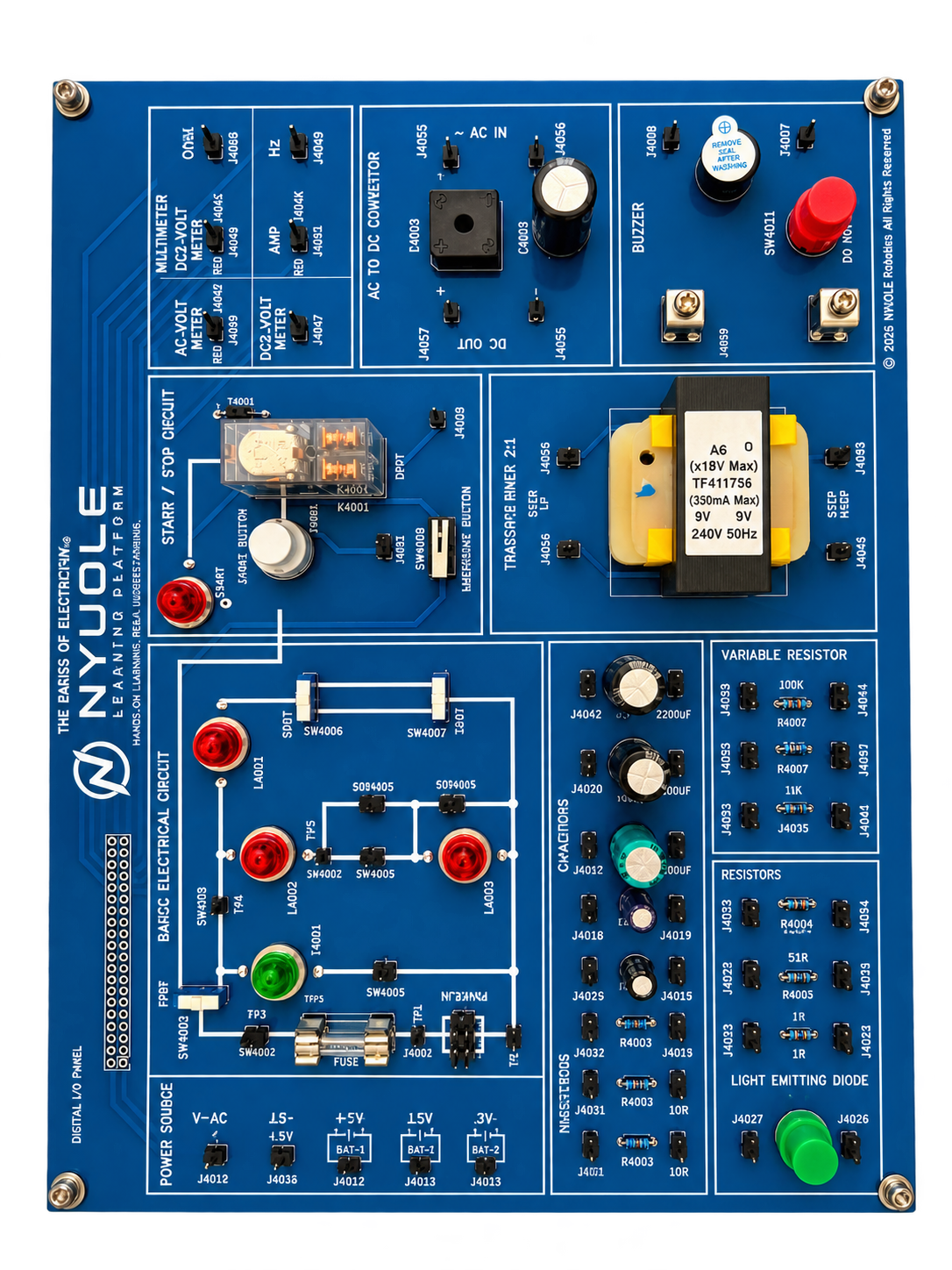
Basics of Electricity
Students begin with real electrical circuits, components, measurement and troubleshooting while building an understanding of how electricity behaves.
View board details
One hands-on learning platform that takes students from their first electrical circuit to designing, diagnosing and building real technology.
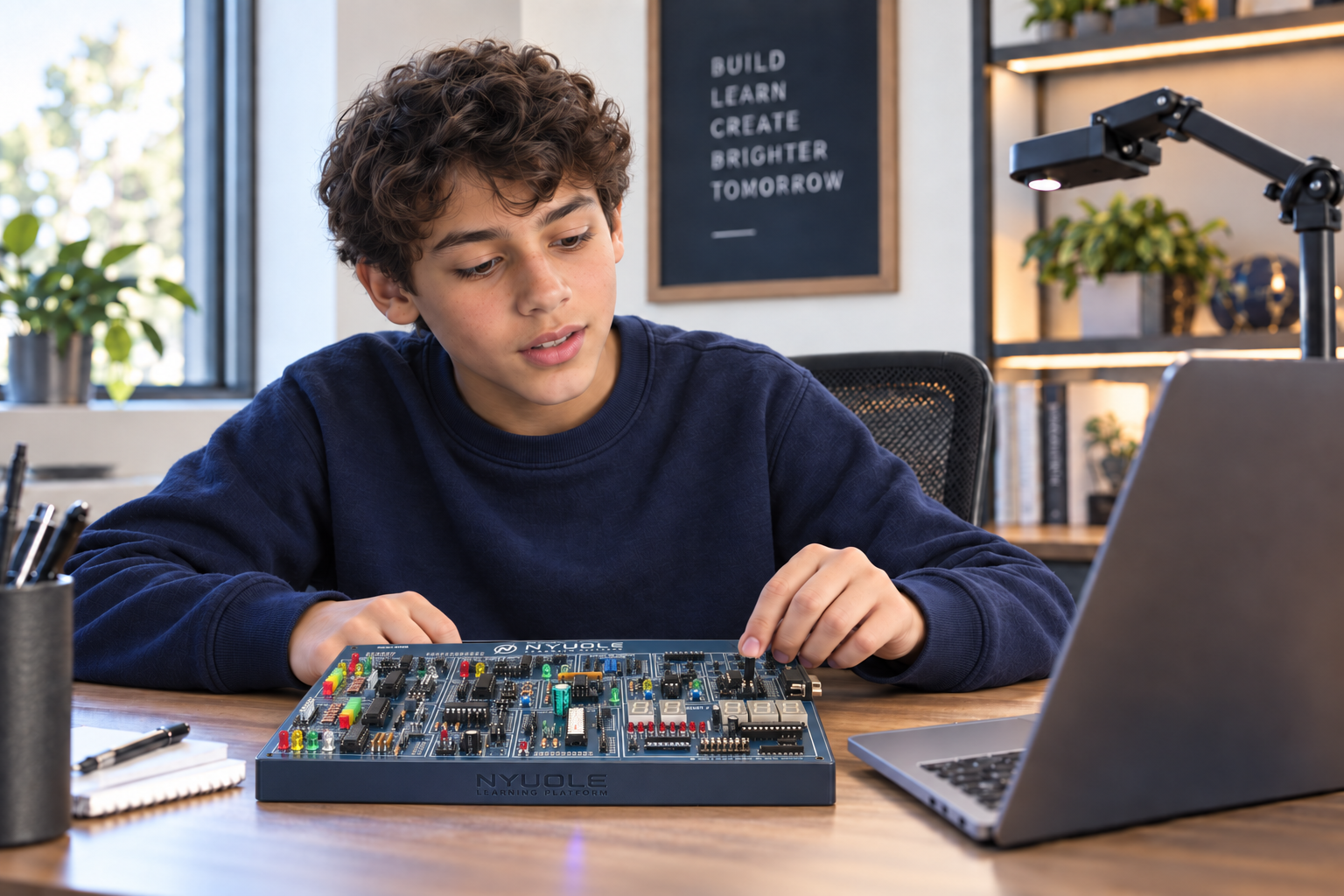
A short introduction to the NYUOLE approach, the hands-on learning platform and the engineering pathway behind it.
NYUOLE brings physical electronics, measurement technology, engineering software, structured learning and intelligent guidance together in one connected platform.
Build the foundations: voltage, current, resistance, power, circuits, safe measurement and how electrical energy behaves.
Learn how resistors, capacitors, diodes, transistors and other components shape, control and protect electrical signals.
Explore amplifiers, comparators, timers, rectifiers, regulators, filters and continuous signals through real circuits and measurements.
Understand binary, logic gates, counters, registers, multiplexers, data conversion and the building blocks of digital systems.
Connect hardware and code using microcontrollers, GPIO, PWM, ADC, timers, memory and communication interfaces.
Bring sensors, motors, motor drivers, control logic and embedded software together to build and troubleshoot robotic systems.
Study feedback, control, communication networks and system integration used in automated machines and industrial technology.
Move from learner to creator with PCB design, 3D modelling, prototyping, testing and structured engineering problem solving.
Use AI as a guided learning and engineering tool while understanding how intelligent systems connect to sensors, data and real hardware.
Students begin with real electrical circuits, components, measurement and troubleshooting while building an understanding of how electricity behaves.
View board details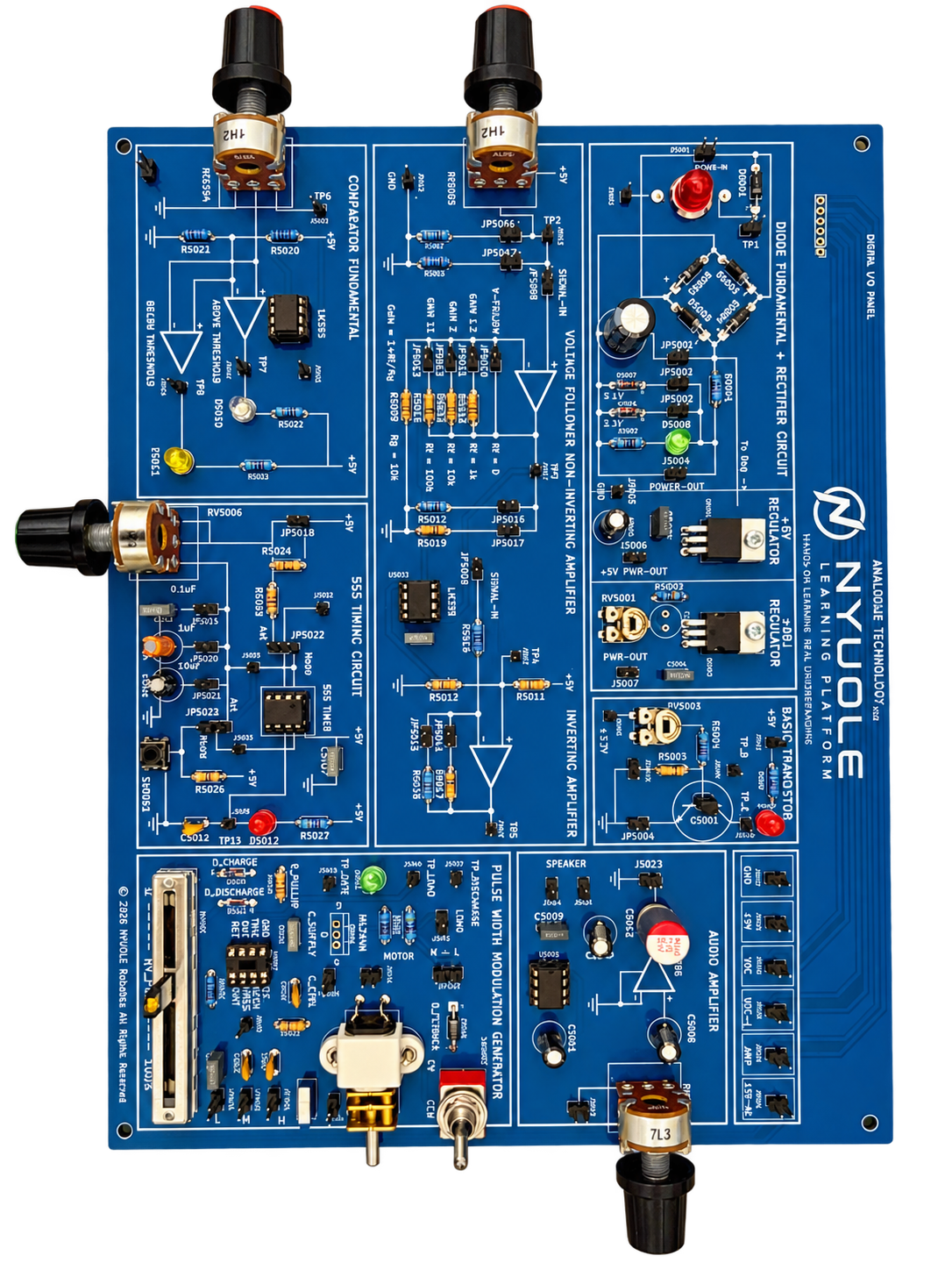
Students progress into analogue electronics through amplifiers, comparators, timers, rectifiers, regulators, transistor circuits and signal behaviour.
View board details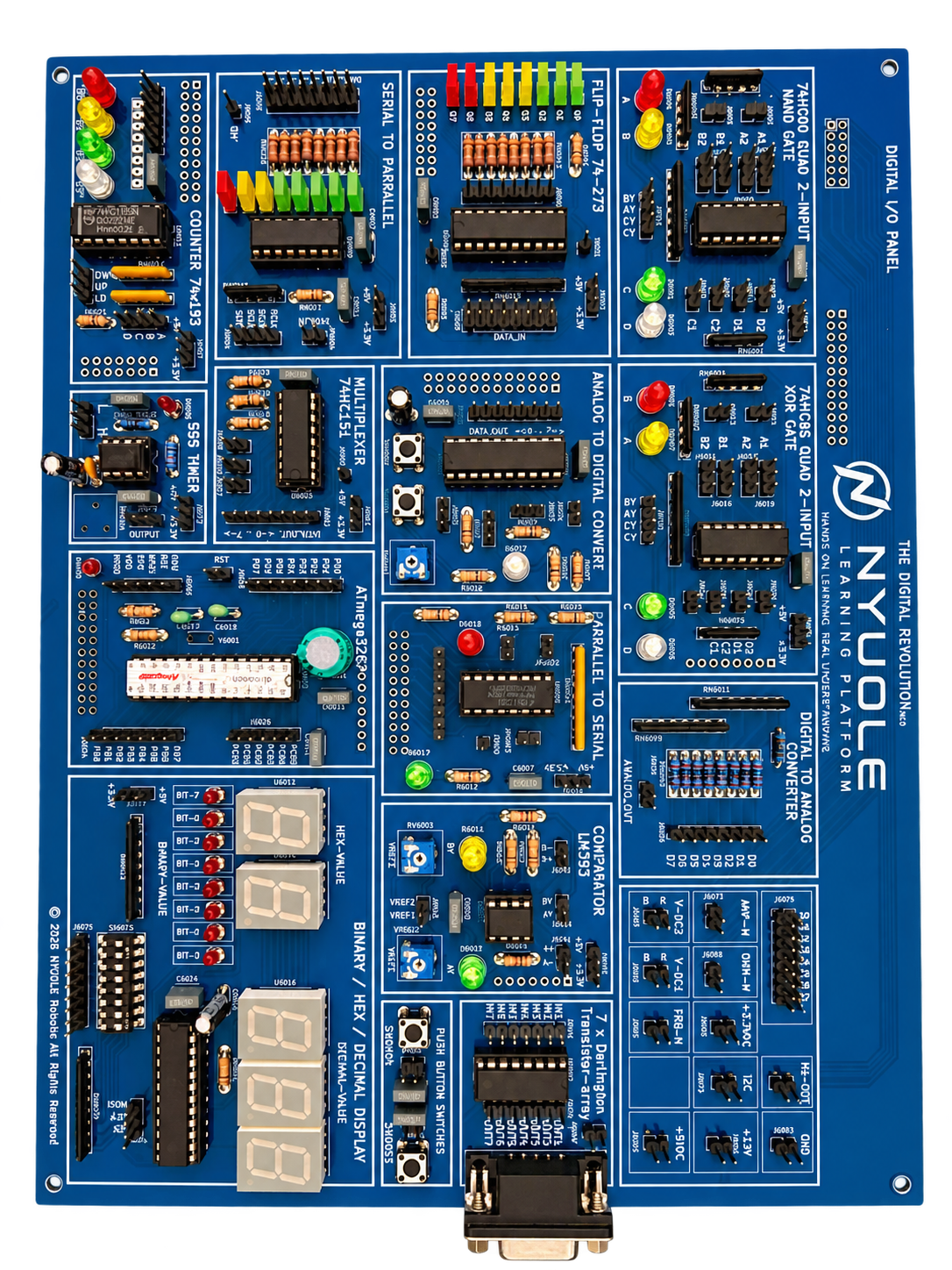
Students explore logic gates, counters, multiplexers, memory, data conversion, microcontrollers and the foundations of modern computing.
View board detailsNYUOLE connects student boards to software so learners can observe what is happening inside a circuit rather than treating electronics as a black box.
Voltage, current, resistance, frequency, waveforms and digital signals.
See what is happening across a circuit while the student changes it.
Understand why a circuit works — or why it does not.
Change, test and immediately observe the effect.
NYUOLE is being developed to give both the AI tutor and teacher insight into the student’s practical work — not just the final answer.
Which jumper wires and components have been connected
Which parts of the circuit are powered
What signals and voltages are present
What the student is measuring
Where the circuit may differ from the intended configuration
How the student approached and corrected a problem
The goal is not simply to tell a student they are wrong. It is to understand what they have built and guide them toward discovering why.
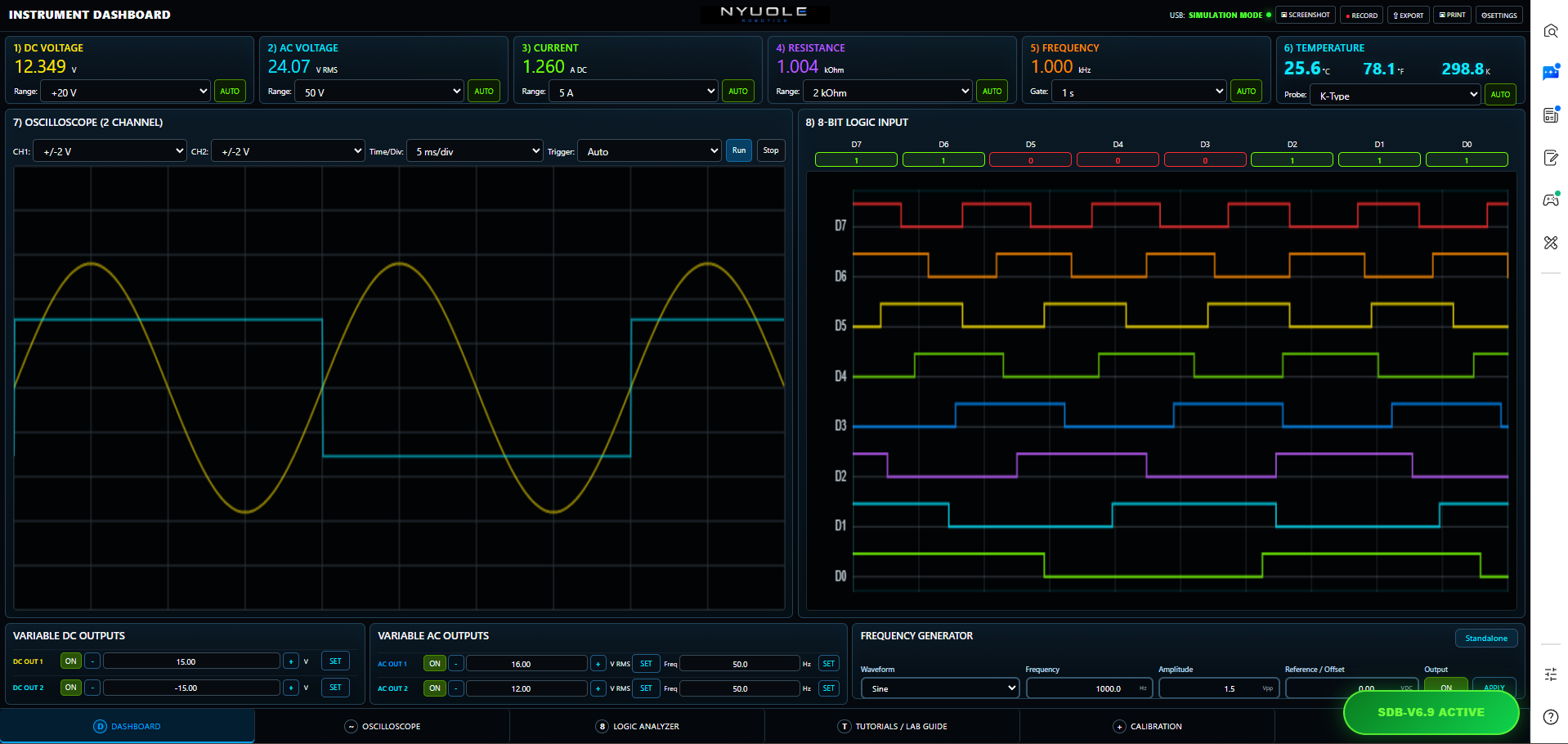
Students can connect physical circuits to virtual instruments, collect data and develop the habits of real diagnostic work.
Knowledge can remain abstract when students rarely interact with a real system.
Students make decisions, observe outcomes and build confidence through practical engineering.
A platform designed to expand as students move from basic electricity into electronics, programming, robotics and engineering design.
Structured learning designed to support Australian and NSW technology and STEM outcomes as the program develops.
Guided activities and practical demonstrations help teachers focus on mentoring students rather than delivering every instruction.
NYUOLE is designed around practical technology creation — from embedded systems and coding to PCB design, 3D modelling and open engineering software.
NYUOLE was created to make high-quality practical technology education more accessible to students across schools, regional communities, libraries, home education and alternative learning environments.
Interested in a school demonstration, pilot program, partnership or product information? We would like to hear from you.